
Your Body Image Is a Feminist Issue
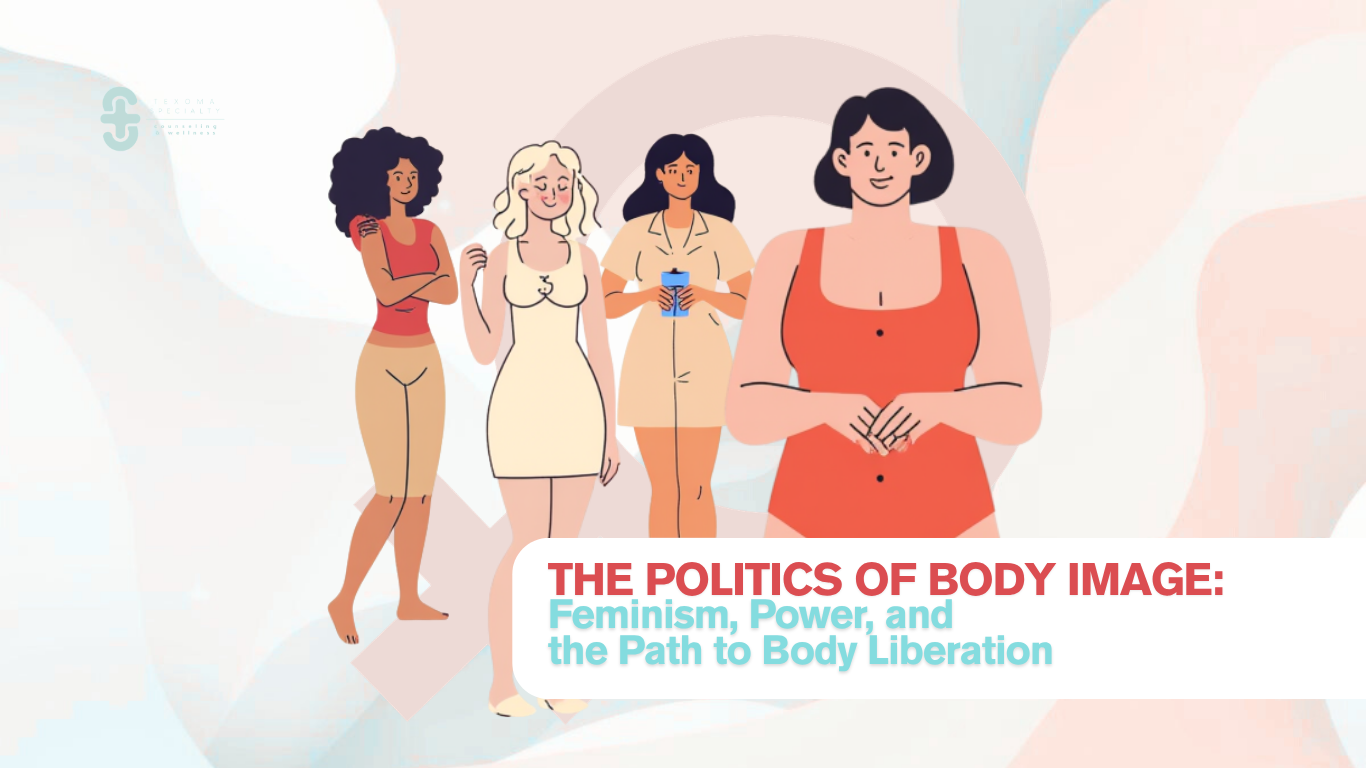
The Politics of Body Image: Feminism, Power, and the Path to Body Liberation 💭
The politics of body image sit at the intersection of personal experience, cultural power, and feminist theory. What we believe about bodies—our own and others’—is not formed in isolation; it is shaped by systems that determine which bodies are valued, which are marginalized, and which are expected to shrink, change, or apologize for existing. Feminism has long engaged with body image not as a superficial concern, but as a deeply political one.
Body Image Is Not an Individual Failure ✖️
Mainstream culture often frames body dissatisfaction as a personal problem to be solved through discipline, willpower, or “fixing” self‑esteem. Feminist analysis challenges this narrative by highlighting how body image struggles are produced within social systems—media, healthcare, education, and economic structures—rather than individual shortcomings.
From a feminist perspective, dissatisfaction with one’s body is a predictable outcome of living in a culture that:
• Rewards conformity to narrow beauty standards
• Ties women’s and marginalized genders’ worth to appearance more than to agency or competence
• Profits from insecurity through diet, beauty, and wellness industries
When millions of people experience similar dissatisfaction, the issue is structural, not personal. Research has found that feminist identification can support more critical awareness of oppressive beauty norms and is linked to lower body shame and less internalization of media ideals, even if it does not automatically eliminate body distress.
Beauty Standards as a Tool of Social Control 📺
Feminist scholars have long argued that beauty standards function as a form of social regulation and body politics. Expectations around thinness, youth, able‑bodiedness, whiteness, and gender conformity narrow who is seen as acceptable, professional, desirable, or worthy of care and safety.
These standards often:
• Consume time, money, and emotional energy
• Encourage constant self‑monitoring and self‑correction
• Distract from political participation, leadership, and resistance
By keeping attention focused on appearance and self‑surveillance, systems of power maintain control over how bodies move through the world and who feels entitled to take up space. Feminist perspectives on the body argue that this regulation is not incidental; it is one way hierarchies like sexism, racism, ableism, fatphobia, and cisnormativity are reproduced.
Intersectionality and Unequal Body Politics 🌐
Body image politics do not affect all bodies equally. Intersectional feminism emphasizes that race, class, disability, gender identity, sexual orientation, and size intersect to shape how people experience their bodies and how others respond to them.
For example:
• Fat bodies face medical bias, stigma, and moral judgment, often under the guise of “health.”
• Black and brown bodies are hyper‑policed, stereotyped, and measured against white beauty and respectability norms.
• Disabled bodies are frequently erased from representation or framed as needing “fixing” to be acceptable.
• Trans and gender‑nonconforming bodies are subjected to heightened scrutiny, discrimination, and threats to bodily autonomy.
Recent intersectional research on body image among sexual and gender minorities shows how forces like sexism, cisnormativity, and heteronormativity intersect to shape body ideals, distress, and access to care. Scholars have also highlighted how white supremacy has historically centered white, cis, able‑bodied women in body image research and practice, obscuring the realities of racialized and minoritized bodies.
A feminist approach to body image must account for these overlapping systems of oppression rather than offering one‑size‑fits‑all solutions.
The Commodification of “Empowerment” 💄
In recent years, body positivity and self‑love language have entered mainstream marketing and influencer spaces. While visibility and representation can be meaningful, feminism critiques how empowerment is often repackaged as a consumer product that leaves oppressive structures intact.
When empowerment is reduced to:
• Buying confidence through products and curated aesthetics
• Loving your body without questioning harmful systems or inequities
• Individual mindset shifts without collective or structural change
…the political roots of body liberation risk being diluted. Feminist and fat liberation scholars warn that when brands and institutions embrace “body positivity” without addressing weight stigma, racism, ableism, or access to care, the language of empowerment can be used to sell more, not to transform conditions.
Feminism calls for moving beyond self‑acceptance as an endpoint toward broader cultural and systemic transformation—asking not only how individuals feel, but who profits and who is still excluded.
Feminism and the Right to Bodily Autonomy ✊
At its core, feminist engagement with body image is about bodily autonomy—the right to exist in one’s body without coercion, shame, or violence. This includes:
• Freedom from appearance‑based discrimination in workplaces, schools, and public life
• Access to respectful, evidence‑based healthcare at all sizes, races, genders, and abilities
• The right to choose how one engages with beauty, fitness, or body modification
Autonomy means choice without punishment, whether that choice involves embracing, rejecting, or redefining beauty norms. Feminist perspectives emphasize that real choice depends on dismantling the structural pressures—economic, racial, gendered—that make some options costly or unsafe for certain bodies.
Reframing Body Image Through a Feminist Lens 🔍
Rather than asking, How can I feel better about my body?, feminism invites deeper questions:
• Who benefits from my dissatisfaction?
• What messages have I been taught to internalize, and whose values do they reflect?
• How might collective change—policy shifts, representation, community care—reduce individual harm?
This reframing shifts the focus from fixing bodies to challenging the systems that demand they be fixed. Studies suggest that feminist identity and critical consciousness can help people resist internalizing oppressive ideals and contextualize body shame as a response to sexism and other forms of discrimination rather than a personal flaw.
In practice, this might look like:
• Naming body image distress as a response to systemic pressures, not a lack of willpower
• Seeking communities and media that affirm diverse bodies and challenge harmful norms
• Supporting policies and movements that protect bodily autonomy and challenge discrimination
Moving Toward Body Liberation 🌱
Body liberation, a concept rooted in feminist, fat liberation, and broader social justice movements, goes beyond positivity or neutrality. It asserts that all bodies deserve dignity, safety, and respect—regardless of appearance, ability, size, or conformity.
This vision emphasizes:
• Structural change alongside personal healing
• Community and collective responsibility for challenging stigma and discrimination
• Resistance to narratives that equate worth with looks, productivity, or “health” as defined by dominant groups
The body liberation movement has been shaped by activists and writers who explicitly link body politics to racism, ableism, healthism, and classism, arguing that changing how we feel individually is insufficient without changing the conditions that harm certain bodies more than others. Body liberation is not about loving every part of yourself every day; it is about reclaiming the right to exist without justification.
Closing Thoughts 💡
The politics of body image remind us that our relationships with our bodies are shaped long before we become aware of them. Feminism offers a framework for understanding these dynamics not as personal failures, but as reflections of power, culture, and history. By examining body image through a political lens, we open the door to compassion, resistance, and the possibility of a world where bodies are not battlegrounds—but simply places where life is lived.
If body image has felt like a private struggle, it may be validating to recognize that you are responding to systems designed to produce dissatisfaction. From a feminist perspective, working toward body liberation is not just about feeling better individually; it is part of building a more just and livable world for all bodies.
📅 You Don't Have to Navigate This Alone
At Texoma Specialty Counseling & Wellness, we offer compassionate, trauma-informed support for women navigating disordered eating and body image concerns—at every stage of life.
Further Reading / Sources 📚
Feminist Perspectives on the Body – Stanford Encyclopedia of Philosophy (overview of feminist work on bodies, power, and autonomy). https://plato.stanford.edu/entries/feminist-body/
Global Politics of the Body – Women Worldwide (open textbook chapter on body politics and power). https://open.oregonstate.education/womenworldwide/chapter/global-politics/
Feminist Identity, Body Image, and Disordered Eating – Sex Roles / NIH (research on feminist identity and body image). https://www.ncbi.nlm.nih.gov/pmc/articles/PMC4999297/
Prominent Body Politic Movements, Explained – Body Positive Alliance (body liberation and related movements). https://bodypositivealliance.org/blog/prominent-body-politic-movements-explained
Understanding the Impact of White Supremacy in Body Image – PubMed (Sociostructural‑Intersectional Body Image framework). https://pubmed.ncbi.nlm.nih.gov/38154289/