
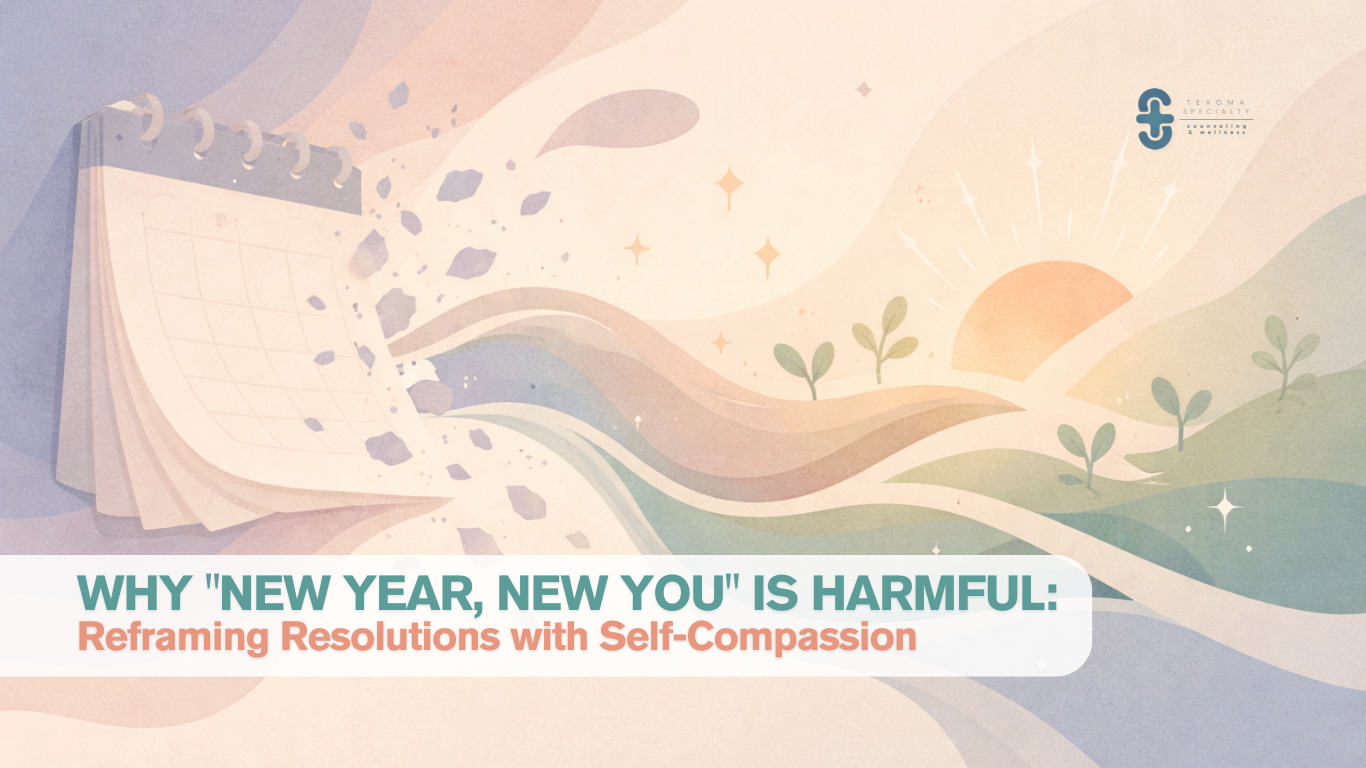
Why "New Year, New You" Is Harmful: Reframing Resolutions with Self-Compassion
🎆 Why “New Year, New You” Is Bad for Your Mental Health — And What to Do Instead
As we enter 2026, the familiar refrain echoes everywhere: "New Year, New You." Gyms advertise discounted memberships, diet programs promise transformation, and social media fills with before-and-after narratives. Yet beneath this glossy messaging lies a troubling psychological reality—the "New Year, New You" framework can be deeply harmful to your mental health, particularly if you're already struggling with anxiety, trauma, or body image concerns.
The good news? There's a better way to approach the new year that honors who you are right now while creating space for genuine, sustainable growth.
🧠 The Hidden Cost of “Reinvention Culture”
The "New Year, New You" mentality operates on a dangerous premise: your current self is inadequate and must be replaced. This messaging inherently suggests that who you are today is broken, flawed, or unworthy—a narrative that triggers shame rather than motivation. For people with histories of trauma or existing mental health challenges, this framing can be particularly harrowing and triggering, reinforcing negative beliefs about yourself and your capabilities.
The statistics tell a sobering story. Research shows that 90% of people fail to complete their New Year's resolutions, with approximately 25% abandoning them by the end of the first week. This isn't a personal failure—it's a systemic problem rooted in how we approach change itself.
Shame as a Foundation for Change
Most New Year's resolutions are built on shame-based motivation. The most common resolutions center on weight loss, quitting "bad" habits, and physical transformation—all framed through the lens of what's wrong with you. But shame is not a sustainable motivator. In fact, shame-based approaches place you on an unstable foundation that crumbles the moment you struggle or slip up.
When you inevitably fall short of perfectionist New Year's goals, the cycle intensifies: unmet expectations lead to negative self-talk, which triggers stress and anxiety, which makes it harder to follow through on your intentions. For those with trauma histories, this cycle can reaffirm deeply ingrained negative beliefs about your abilities and worth.
The Perfectionism Trap
Perfectionism presents itself as ambition but functions as a cage. While striving to do your best can be motivating, perfectionism often leads to setting goals that are unrealistic and impossible to achieve. The result? Disappointment, feelings of failure, and damage to your self-esteem and confidence.
Additionally, the scale of these resolutions matters enormously. People often create daunting, life-altering goals that are formidable in scope—lose 50 pounds, completely change careers, overhaul your entire life. These massive expectations increase the likelihood of failure and invite your inner critic to show up with full force when you inevitably struggle.
🚨 The Hidden Harms: Diet Culture and Eating Disorders
The New Year period presents particular dangers for people struggling with eating disorders, body dysmorphic disorder, or disordered eating patterns. Gyms and weight loss programs flood the market with incentives and discounted memberships, intensifying cultural conversations around diets, weight loss, and appearance. This messaging often shames people for eating during the holidays, framing the festive season as something to "correct" rather than enjoy.
For individuals with eating disorders, workplace weight loss incentives, casual lunchtime conversations about "eating healthier," and the pervasive diet culture messaging can be deeply triggering. The "New Year, New You" narrative transforms into a harmful mandate to shrink yourself—physically and sometimes emotionally.
📱 Social Comparison & External Pressure
In an age of constant connectivity, social media amplifies the pressure to reinvent yourself. Everyone else's highlight reels suggest they have their lives perfectly together, making you feel inadequate by comparison. This external pressure to match others' success intensifies stress and overwhelm, even though everyone is struggling with their own invisible challenges.
The new year compounds this by inviting societal pressure to reflect on the past year and judge your progress against others' achievements. Heightened expectations and comparisons can intensify stress and lead to feelings of failure or loneliness.
😞 Beyond Resolution Stress: Depression and Anxiety
For many people, the new year doesn't feel like a fresh start—it feels like a heavy weight. The period can trigger depression and anxiety, particularly when combined with lingering holiday stress, financial strain, grief, and isolation. What society frames as "the most wonderful time of the year" can actually be lonely, stressful, and isolating.
New Year's resolution stress is a specific phenomenon where you place enormous pressure on yourself to make big changes in just twelve months. This stress manifests as overwhelm, anxiety, headaches, and fatigue—and it can worsen existing mental health challenges, making it harder to cope and stay positive.
🔄Reframing: From Reinvention to Reflection
Rather than pursuing a "New You," consider a New Year Reflection—a gentler, more compassionate approach to the turning of the calendar.
1. Replace Shame-Based Goals with Values-Based Intentions
Instead of "I will lose 20 pounds" or "I will completely transform my life," try intentions rooted in your values: "I will practice self-compassion when I struggle," "I will seek support when I need it," or "I will honor my body's needs." These intentions acknowledge that growth is gradual, nonlinear, and deeply personal.
2. Set Small, Achievable Goals
No resolution can be too small. Setting modest, manageable goals creates a foundation for success rather than setting yourself up for failure. Progress matters more than perfection. Celebrate small wins along the way rather than waiting for a complete transformation.
3. Embrace Self-Compassion Over Self-Criticism
Self-compassion is the antidote to shame-based motivation. When you struggle—and you will—practice kindness toward yourself rather than harsh self-judgment. Remember that failing is part of the journey, not the end of it. Every setback is an opportunity to learn and grow, not evidence of your inadequacy.
4. Seek Professional Support
Working with a therapist or counselor is a valid and valuable form of self-care, not a sign of weakness. Mental health professionals can help you navigate change in ways that honor your psychological well-being, process past trauma that may be influencing your self-perception, and develop healthy coping strategies that actually work for you.
🧠 The Bottom Line
Sustainable change doesn't come from rejecting who you are. It comes from accepting yourself as you are right now—with all your complexity, history, and humanity—and making intentional choices from a place of self-love rather than self-loathing.
You don't need a "New You" in 2026. You need to be kinder to the you that already exists. The new year is simply a calendar marker, not a magical reset button. Real transformation happens through patience, self-compassion, and the willingness to seek support when you need it. That's the only resolution worth making.