
Leaving Home Doesn't Mean Leaving It Together: Navigating the Transition to College
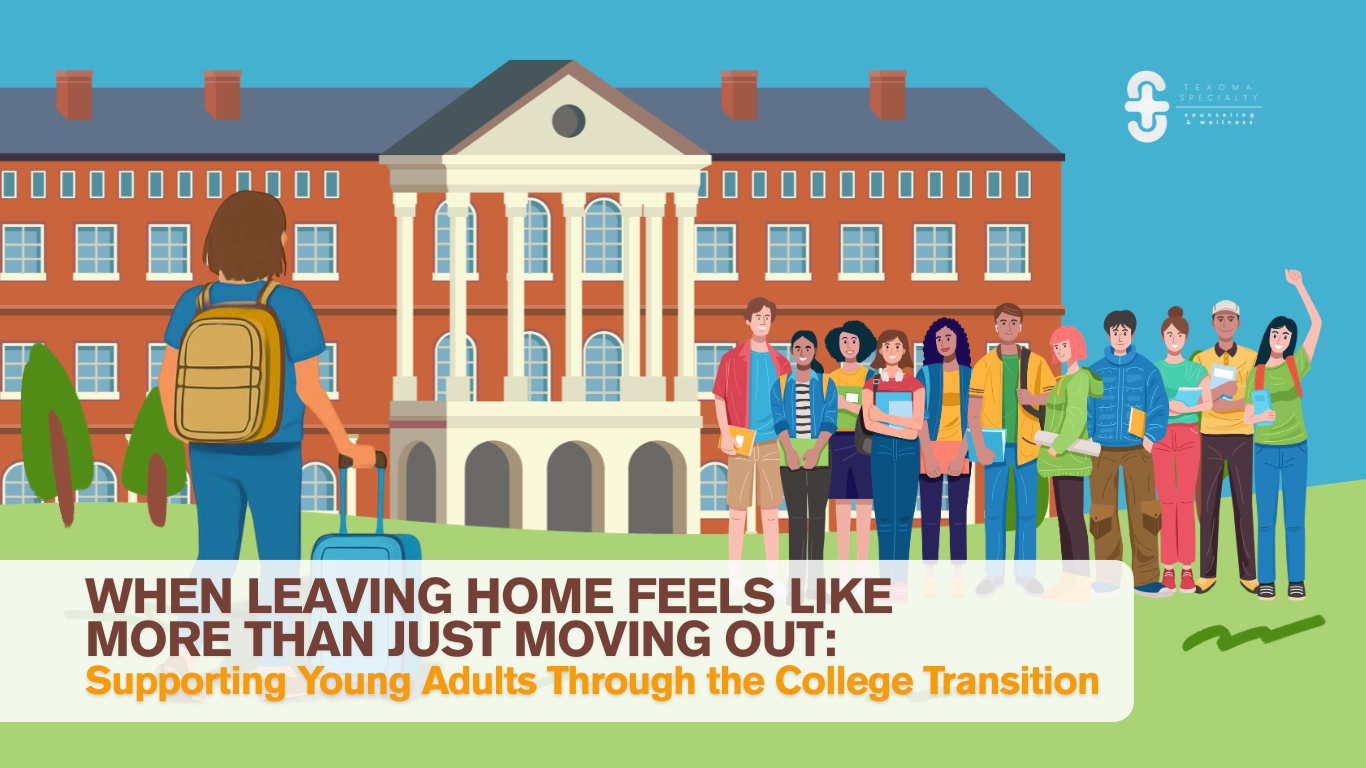
🎓 When Leaving Home Feels Like More Than Just Moving Out — Supporting Young Adults Through the College Transition
Hi, I'm Rachel — I'm one of the newer therapists here at TSC, and I work primarily with young adults navigating life transitions, relationships, anxiety, depression, and eating disorders. If you or your kid is staring down a dorm room move-in date right now with a mix of excitement and quiet dread, I want you to know that feeling is incredibly normal, and it's exactly the kind of thing I love helping people work through.
August doesn't just mean K-12 kids heading back to school — for a lot of families, it means watching a young adult drive away for the first time, or being that young adult yourself, suitcase packed, identity slightly less packed.
🧳 Why this transition hits so hard
College gets sold as the "best years of your life," which honestly sets a lot of people up to feel like something's wrong with them when it doesn't feel that way right away. The truth is, leaving home is one of the biggest identity shifts a person goes through. You're losing your built-in support system — the people who know your patterns, your history, your shorthand — at the exact moment you're being asked to build an entirely new life from scratch.
That's not a small ask. All at once:
New environment, new social dynamics, new rules
New level of independence - around money, food, sleep, and time
All while their brain (especially if under 25) is still developing - along with the executive function skills to manage it all smoothly.
Add existing anxiety, depression, or disordered eating patterns into that mix, and the stakes go up considerably. Structure and support systems that were quietly holding things together at home don't automatically come with you.
🔍 What I see most often in session
😔 Homesickness that people feel embarrassed about
Like they're "too old" to miss their family this much. They’re not. Research consistently shows that homesickness is a normal, healthy response to loss of attachment — not a sign of weakness or immaturity.
😰 Anxiety spikes around new social situations
Who do I sit with? Who do I room with? What if I don't fit in? The absence of familiar social scaffolding makes these questions feel enormous, especially for those already prone to anxiety.
🍽️ Disordered eating patterns that worsen in the transition
Without family meals, dining hall unpredictability, or the loss of a previous routine, eating patterns that were manageable at home can become much harder to navigate.
🪞 Identity questions that get louder once the noise of high school structure goes quiet
Who am I when nobody here has known me my whole life? The freedom of a blank slate can feel as disorienting as it feels liberating.
None of this means college was the wrong choice, or that something's broken. It means a major life transition is happening, and transitions are hard on nervous systems by design.
🌿 A few tips, whether you're leaving or staying behind
If you're the student:
Build small anchors into your new routine early — a regular FaceTime time with family, a go-to coffee order, a walking route you know. Predictability in small things makes the big unknowns easier to tolerate. Consistent micro-routines are one of the most evidence-supported tools for managing anxiety during transitions.
If you're the parent:
Resist the urge to fix every hard phone call. Sometimes a homesick call isn't asking you to solve anything, it's asking you to witness it. "That sounds really hard" goes further than you'd think. Your presence matters more than your solutions.
For everyone:
Name the grief that's mixed in with the excitement. Even good transitions involve loss — of a routine, a role, a version of a relationship. You're allowed to feel both at once. Naming that grief rather than bypassing it is what allows it to move.
💜 You don't have to figure this transition out alone
Whether you're the one packing up your room or the one watching the car pull away, I'd love to help you navigate what's ahead — building coping tools for anxiety, processing identity shifts, or working through disordered eating patterns that flare up under change.
I have openings right now for young adults and families heading into this season.
📅 Connect with Rachel
👉 Learn more about Rachel
📞 Call TSC at (888) 659-7618
🌐 texomaspecialtycounseling.com
You don't have to white-knuckle this transition. Help is here. 🌱
📚 Further Reading & Sources
Adolescent Brain Development and Executive Function — NCBI — Research on prefrontal cortex development through the mid-twenties and why young adults face heightened challenges with self-regulation, planning, and impulse control during college years.