
Recovery Isn't a Straight Line — And That's Not a Failure
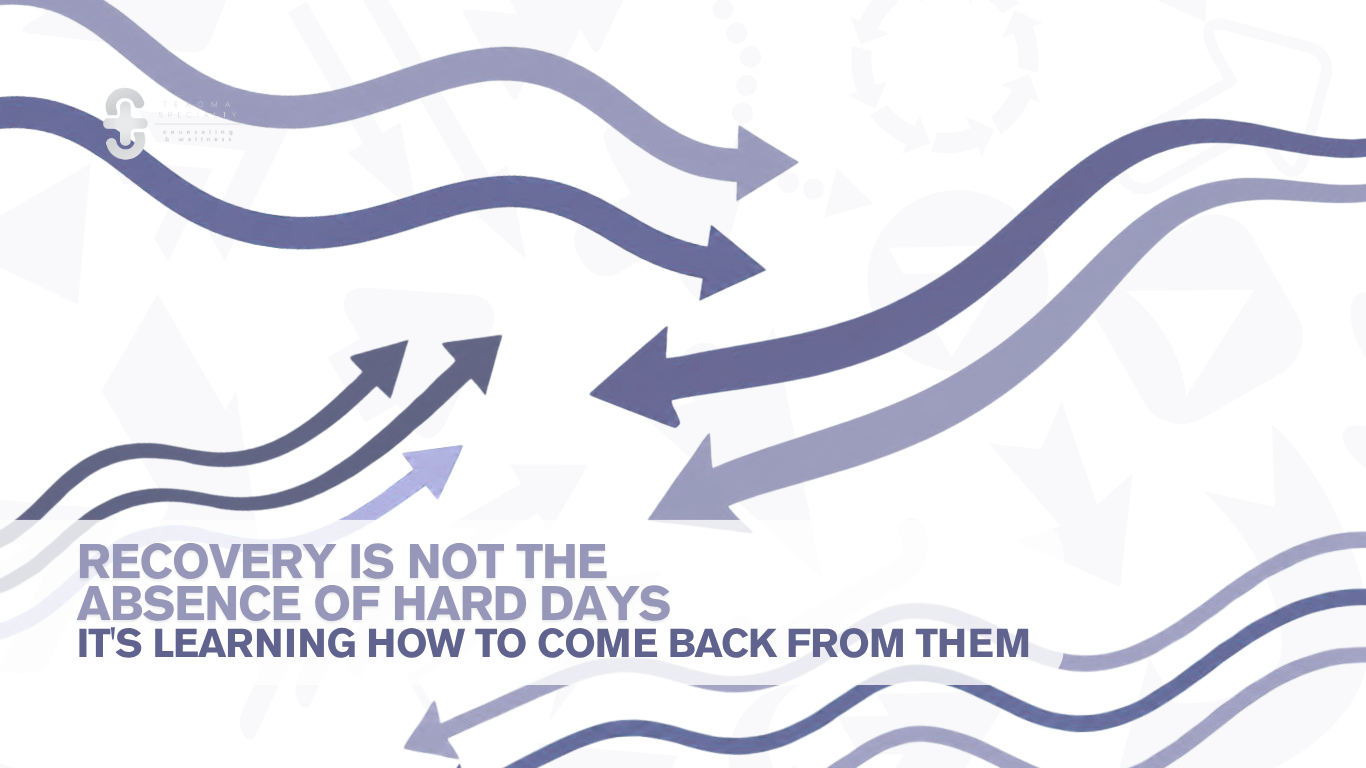
🌿 Recovery is not the absence of hard days — It's learning how to come back from them.
If you've ever been in eating disorder recovery — or supported someone who has — you probably already know that the journey rarely looks the way anyone expects it to.
There's this picture people carry around of what recovery is supposed to look like. Linear. Upward. A series of wins stacked neatly on top of each other until one day you're just... better. Recovered. Done.
And then life happens. A stressor you didn't see coming. A social situation that was harder than you thought. A week where everything felt like too much and old patterns started whispering again. And suddenly that picture of tidy, forward-moving recovery feels like a lie — and the shame of "going backward" can feel worse than whatever triggered it in the first place.
Here's what we want you to know: that's not failure. That's recovery.
🔄 The Myth of the Straight Line
The most resilient people in recovery aren't the ones who never struggle. They're the ones who've built enough tools, enough self-awareness, and enough support around them that when life gets hard — and life will always get hard — they can navigate it without completely losing themselves in the process.
That's adaptation. And adaptation is what recovery actually looks like in the real world.
💪 What resilience in recovery really means
It means recognizing a trigger for what it is instead of just being swept away by it. It means calling your therapist or reaching out to your support system when things feel shaky, instead of waiting until you're in crisis. It means eating the thing at the family dinner even when the critical voice is loud, and knowing that's an act of courage, not a small thing.
It means some days the win is a full meal and a genuine moment of peace afterward. And other days the win is just getting through the day without giving up on yourself entirely.
Both of those count. Both of those are recovery.
🤝 The role of community in resilience
One of the things we hear most from people in recovery is how isolating it can feel — especially when everyone around them seems to have a "normal" relationship with food and their body. The comparison is exhausting. The silence around eating disorders can make people feel like they're the only ones fighting this particular battle.
They're not. Not even close.
Community — whether that's a therapist, a group, an online resource, or just one person who really understands — changes the shape of recovery. It makes the hard days more survivable and the good days feel more real. It reminds people that resilience isn't something you build alone.
💜 That's a big part of why the Recovery Academy exists
We built the Recovery Academy because eating disorder recovery deserves more than a once-a-week appointment.
It deserves:
Ongoing support and real information,
Community with people who understand where you are
Tools that travel with you into everyday life — the moments between sessions, the hard Sunday afternoons, the holiday dinners, the ordinary Tuesdays that somehow become the hardest days.
Recovery doesn't pause when the session ends. Neither should the support.
👉 Learn more about the Recovery Academy
A Note for National Recovery Month
September is National Recovery Month. If you're in recovery right now — at any stage, on any kind of day — we want you to know that you belong here and your story matters. The non-linear, messy, courageous, keep-getting-back-up version of it.
That's the real story of recovery. And it's worth telling.
📅 Connect with TSC
👉 Explore eating disorder services at TSC
👉 Learn about the Recovery Academy
📞 Call TSC at (888) 659-7618
🌐 texomaspecialtycounseling.com
If you or someone you love is looking for eating disorder support, the Alliance for Eating Disorders Awareness helpline is available at 1-866-662-1235.
📚 Further Reading & Sources
National Recovery Month — SAMHSA — SAMHSA's hub for National Recovery Month, including resources for individuals and providers on recovery, treatment access, and community-based support.
What Does Eating Disorder Recovery Really Look Like? — National Eating Disorders Association — NEDA's clinical and lived-experience framework for understanding recovery as a process rather than a destination.